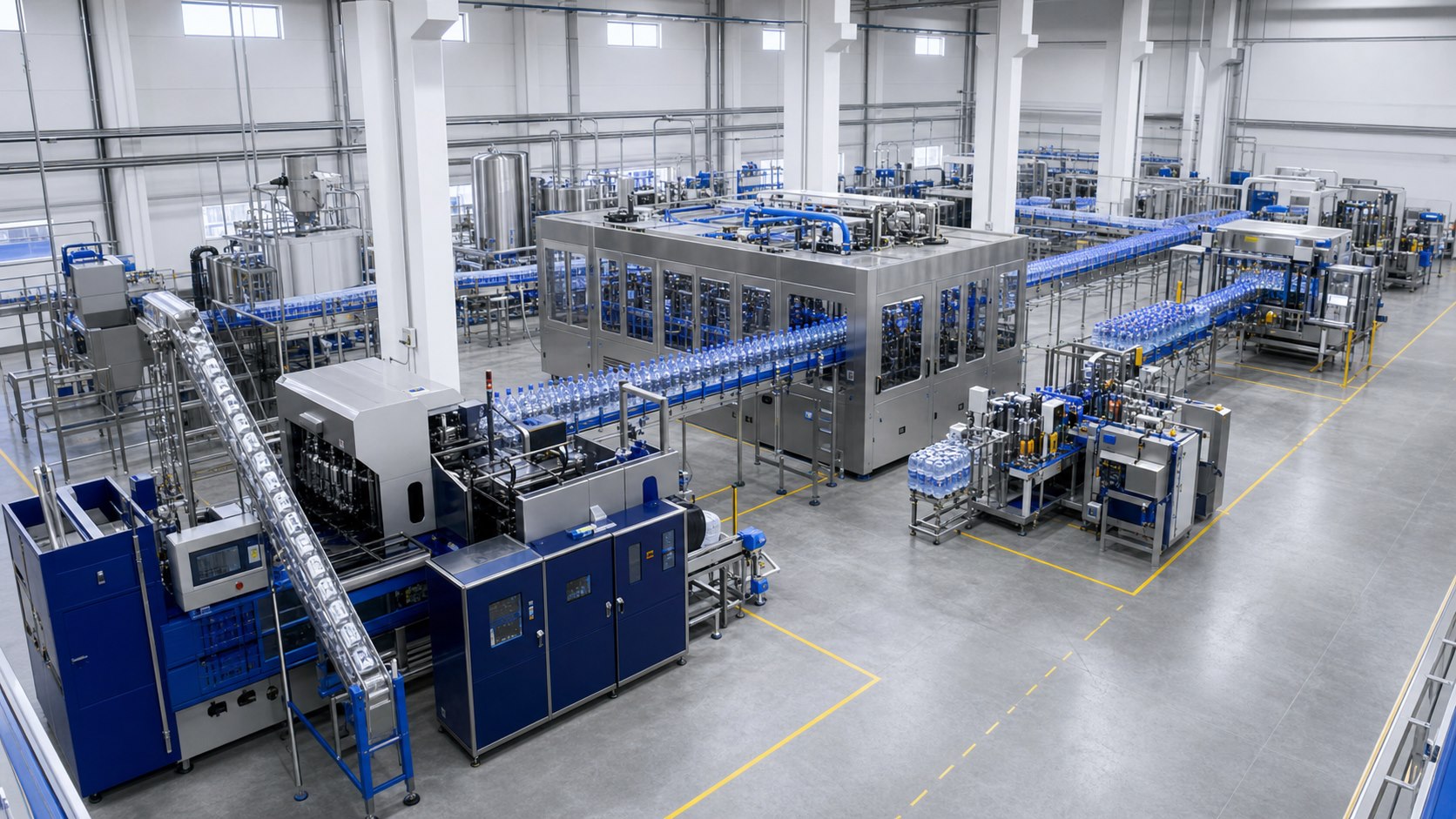
PET bottled water filling line overview
See the general filling line arrangement before comparing machine-only and complete-line quotations.
PET bottled water filling line specialist
Automatic PET bottled water rinsing, filling and capping lines from 2,000 to 24,000 bottles per hour. Start with your bottle size, target output, water source, label, pack format and destination; then compare a machine-only scope with a complete line configuration.
Bottled water filling line: quick answer
A bottled water filling line is an integrated production system that moves treated water and PET bottles through bottle feeding, rinsing, filling, capping, labeling, coding and packing. The correct line is selected from the required sellable bottles per day, bottle formats, net production hours, packaging method, workshop layout and utility capacity, not from a headline BPH number alone.
Machine Photos
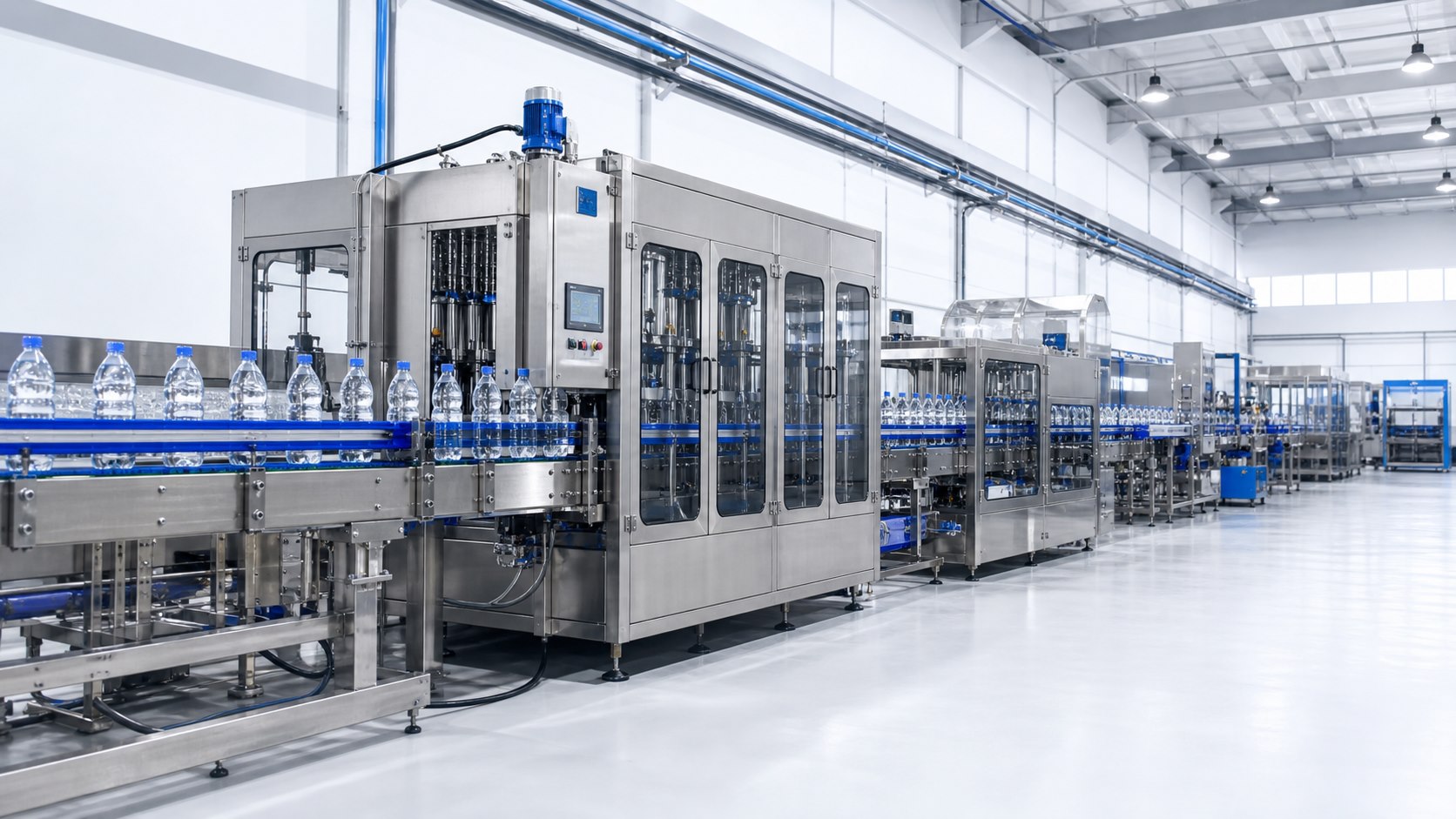
Review the visible filling line zones before comparing quotation scope, layout and downstream equipment.
See the general filling line arrangement before comparing machine-only and complete-line quotations.
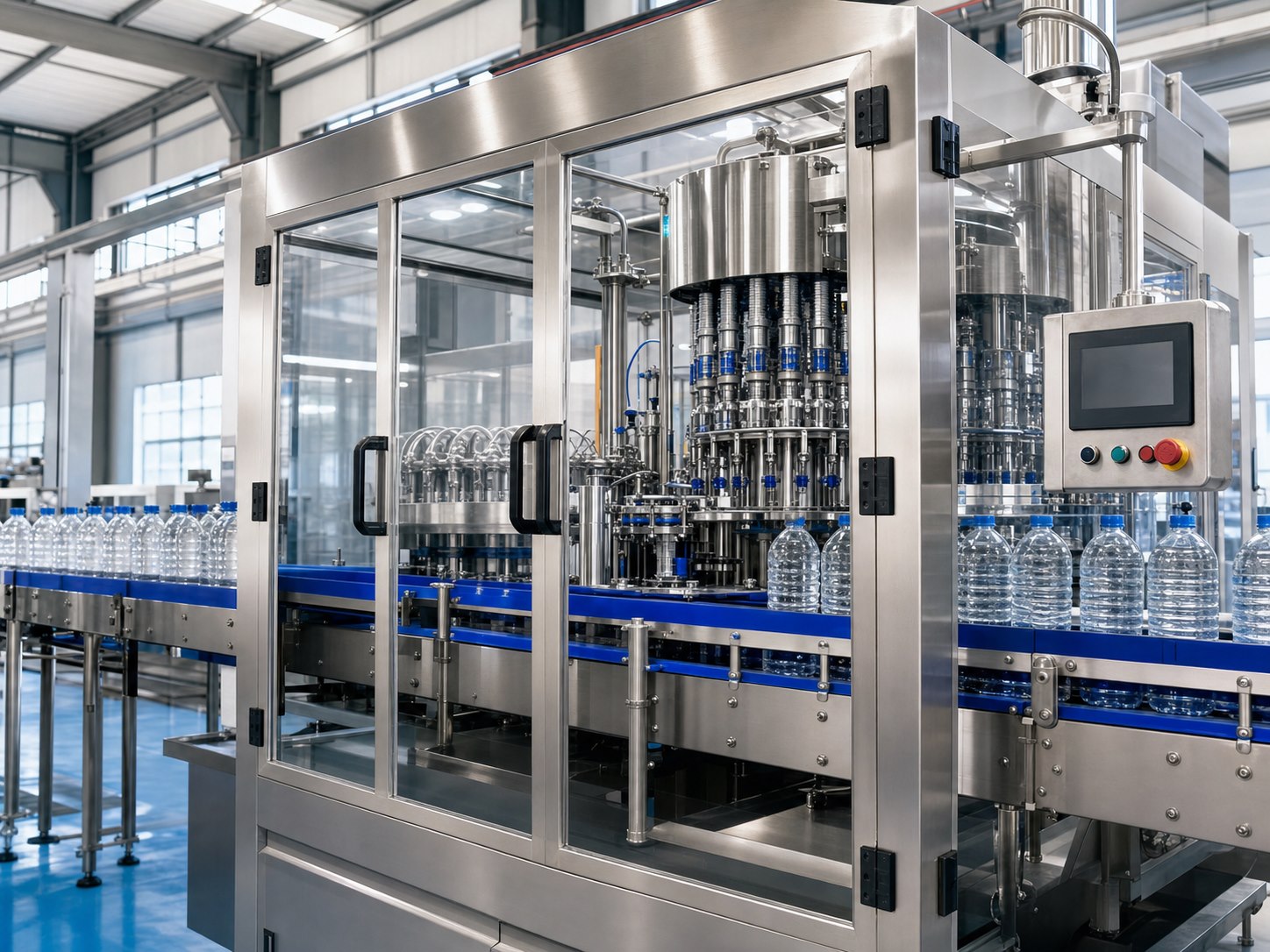
Confirm the valve count, bottle change parts and cap type before requesting a monoblock quotation.
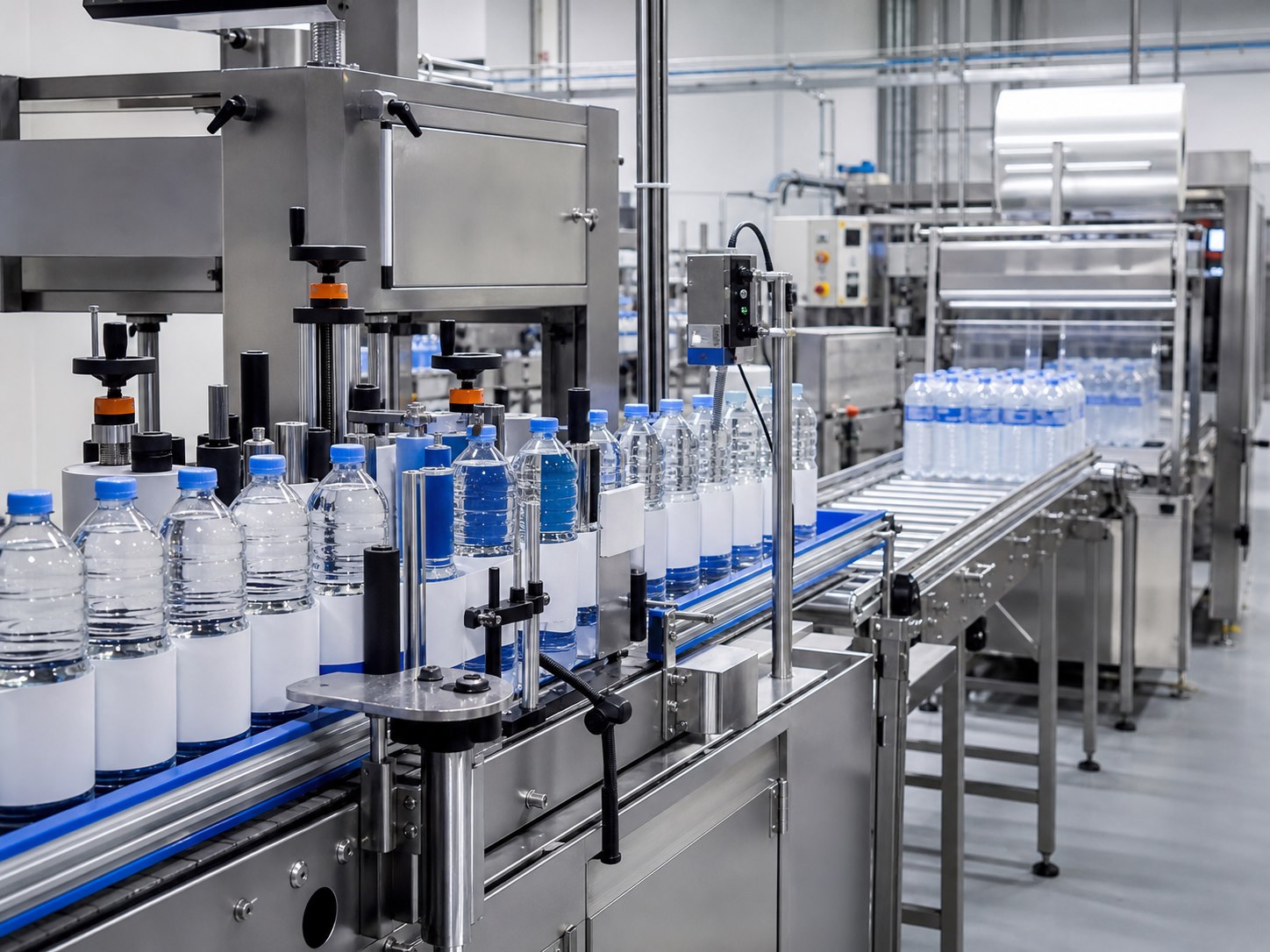
Downstream conveyors, labeling and packing can limit the real output if they are planned too late.
Equipment List
Use this page to prepare a cleaner RFQ instead of comparing only a headline machine price.
Workshop dimensions, voltage, air, water and drainage affect conveyor length and installation planning.
Bottle drawing, volume and cap type affect change parts, guide rails, rinsing clamps and capping heads.
Clarify filling machine only or complete line so conveyors, labeling, coding and packing are not missed.
Shrink wrapping, carton packing or manual packing can limit actual output if not planned early.
Workshop dimensions, voltage, air, water and drainage affect conveyor length and installation planning.
Capacity selector
Start with your target hourly output, bottle size and available workshop space. Each capacity page explains a typical configuration and quotation factors.
Typical monoblock reference: 8-8-3 or similar 3-in-1 monoblock
Typical monoblock reference: 12-12-4 or similar 3-in-1 monoblock
Typical monoblock reference: 16-16-5 or similar 3-in-1 monoblock
Typical monoblock reference: 24-24-8, 32-32-10 or similar 3-in-1 monoblock
Typical monoblock reference: 40-40-12, 50-50-15 or similar 3-in-1 monoblock
Typical monoblock reference: 60-60-18, 72-72-18 or similar 3-in-1 monoblock
Buyer decision path
A better quotation starts from the decision in front of you: capacity, price, scope, bottle details, layout or supplier comparison.
Buyer engineering tools
These free tools keep bottle formats, output assumptions, line scope, supplier evidence and acceptance checks connected through the procurement process.
Featured engineering guides
Use these focused guides to check machine type, real output, bottle format, blowing interface, rinsing, closure quality and maintenance before comparing proposals.
Compare rotary and linear water fillers by sustainable output, bottle range, changeover, footprint, cleaning access and downstream integration. A rotary monoblock usually suits continuous automatic PET production, while a linear machine may suit lower output or unusual containers.
Open technical guideA 3-in-1 water filling monoblock transfers PET bottles through rinsing, still-water filling and capping on synchronized carousels. Buyers should evaluate bottle transfer, valve count, cap handling, controls, sanitation access and the reference format behind the stated BPH.
Open technical guideA line rated on 500ml bottles may produce fewer 1.5L bottles per hour because filling time, bottle stability, blowing cycle, labeling and packing loads change. Request format-specific output rather than assuming one BPH applies to every bottle.
Open technical guideNameplate BPH describes a reference machine condition; real sellable output also reflects bottle supply, changeovers, minor stops, label and pack losses, cleaning and downstream constraints. Plan capacity from good bottles per shift and record the assumptions.
Open technical guideMatch blow-molder and filler capacity by bottle-specific sustainable output, format mix, buffer strategy, recovery after stops and control handshakes. Two machines with the same headline BPH may still starve or block each other.
Open technical guideSpecify bottle-rinse water by approved quality, pressure and flow at the machine, contact route, drainage, recirculation boundary and no-bottle logic. The rinse system must be evaluated with the actual bottle and plant hygiene plan.
Open technical guideInvestigate leaking bottled water by separating bottle neck damage, cap dimensional variation, contamination, application alignment, torque method, tamper-band behavior and post-capping handling. Torque alone does not describe closure performance.
Open technical guideCreate preventive maintenance from supplier manuals, operating hours, machine criticality, sanitation needs, observed condition and production windows. The plan should name the task, safe method, frequency, parts, competence and release evidence.
Open technical guideProcess flow
Plan the full production sequence early so filling speed, bottle handling, labeling and packing do not become bottlenecks.
Equipment by process stage
Follow the complete production route, open the relevant technical guide and define each supplier interface before requesting a complete-line quotation.
Scope comparison
Separating these two scopes makes quotations easier to compare and reduces missing equipment in procurement.
| Decision Point | What Is Included | What Is Usually Excluded | Quotation Risk | Best Next Step |
|---|---|---|---|---|
| Filling machine only | Rinsing filling capping monoblock, cap sorter, control system and basic machine accessories. | Usually excludes long conveyors, water treatment, bottle blowing, labeler, coder and packer unless written into the offer. | Easy to compare by headline price, but missing interfaces can cause extra cost during installation. | Use when existing upstream and downstream equipment is already confirmed compatible. |
| Complete bottled water filling line | Treatment interface, bottle feeding or air conveyor, monoblock, conveyors, labeling, coding and packing equipment. | Civil work, local utilities, building preparation and import duties are normally handled separately. | Needs more project details before quotation, but reduces missing equipment and line-balance problems. | Use for new factories or projects without existing compatible packaging equipment. |
| Expansion-ready line | Current required equipment plus layout reserve, conveyor interfaces and planning for future packing or capacity upgrades. | Future machines are not included unless listed as current order items. | A low-cost layout may block future expansion if space and conveyor direction are not discussed early. | Use when sales volume is growing but the first purchase must stay controlled. |
Layout and utilities
Workshop dimensions, voltage, air, water and drainage affect conveyor length and installation planning.
Complete line
A bottled water project normally includes water treatment, bottle handling, rinsing, filling, capping, labeling, date coding, packing and conveyors. The final equipment list is customized according to bottle size, cap type, label style and plant layout.
View equipment list guide| Capacity range | 2,000BPH to 24,000BPH for PET bottled water projects |
|---|---|
| Main machine | Automatic water rinsing filling capping machine |
| Bottle sizes | Typical 330ml, 500ml, 1L, 1.5L and custom PET bottle samples |
| Line scope | Filling machine only or complete line from treatment to packing |
| Quotation basis | Customized according to capacity, bottle size, label type, packing method and layout |
| Capacity | Higher BPH requires more filling valves, stronger conveying, line buffering and downstream speed. |
|---|---|
| Bottle size | Bottle volume, diameter, height, neck finish and stability influence change parts and filling speed. |
| Valve count | The rinsing, filling and capping monoblock model is selected around target output and bottle size. |
| Labeling | Sleeve, OPP hot melt and self-adhesive labeling use different equipment and conveyor conditions. |
| Packing | Shrink wrapping, carton packing or manual packing changes line balance and labor planning. |
| Water treatment | Purified, mineral and spring water projects may need different upstream treatment scope. |
| Layout and utilities | Workshop size, drainage, compressed air, electrical load and operator access affect the final line. |
| Destination | Destination country affects packing, documentation, shipping plan and after-sales preparation. |
Quotation logic
We do not publish fixed prices because the same BPH target can require different bottle blowing, labeling, packing, water treatment and layout options. Send your bottle size, target capacity and country so the quotation can match the real project scope.
Read Price GuideSelection guide
Choose capacity from market sales plan, shift schedule and expected bottle size mix.
Bottle shape, neck finish and cap size are needed to confirm rinsing grippers and filling change parts.
Decide whether you need only the 3-in-1 machine or a complete line with treatment, labeling and packing.
A clear layout helps confirm conveyors, buffer sections, operator access and utility points.
Send your bottle size, target capacity and country. We will prepare a bottled water filling line configuration and quotation.
Prepare your quote request
Send capacity, bottle size, scope, label and packing details. We will prepare a bottled water filling line configuration for your project instead of a generic machine quote.
Buyer resources
Use the equipment list, RFQ, layout and installation checklist pages to prepare project details before requesting a quotation.
| Equipment scope | Required and optional machines for filling machine only or complete line |
|---|---|
| RFQ details | Capacity, bottle, cap, label, packing, country, voltage and timeline |
| Layout inputs | Workshop dimensions, utilities, drainage, access and expansion space |
| Installation | Site readiness, trial materials, operators and commissioning checks |
Why details matter before pricing
Recommendations are prepared around your bottle size, capacity, label style, packing method and destination.
Contact Allot Tech by email, USA phone or China phone during RFQ discussion.
The configuration should be checked against bottle samples, line scope, utilities and layout before final pricing.
Allot Tech buyer context
BottledWaterFillingLine.com is operated for buyers who need clear scope, equipment lists, layout inputs and quotation requirements before comparing suppliers. The content is kept procurement-focused and does not rely on fake cases, fake reviews or fixed price claims.
Allot Tech provides China manufacturing resources and sourcing support for overseas buyers, including beverage machinery and bottling line supplier communication.
Visit Allot TechMr Kcal shares China manufacturing, sourcing and business context, helping international buyers ask better questions before they request a machinery quotation.
About Mr KcalSend bottle size, target capacity, label type, packing method and destination so the response can focus on real equipment scope instead of a generic headline machine price.
Request configurationBuyer questions
Please send target capacity, bottle size, bottle sample drawing if available, cap type, label type, water type, country and whether you need a filling machine only or a complete line.
Yes, many PET bottle sizes can be handled with suitable change parts. The exact range should be confirmed from bottle drawings or samples.
No. Price depends on capacity, configuration, layout and optional equipment. A project quotation is prepared after confirming the key requirements.
A complete line may include the treated-water interface, bottle blowing or feeding, air conveyor, rinsing filling capping monoblock, labeling, coding, packing and product conveyors. Every quotation should state included, optional, excluded and locally supplied items.
Start with required good bottles per day, bottle mix and net production hours after cleaning and changeovers. Then check that bottle supply, labeling, packing, utilities and workshop space can support the selected BPH.
That depends on the existing plant. Water treatment follows the source and product requirement; bottle blowing is needed when PET bottles will be produced from preforms on site rather than purchased as empty bottles.
There is no universal footprint. Capacity, bottle input, conveyor arrangement, labeler, packer, utilities, maintenance access and finished-goods movement must be placed on a workshop drawing.
Yes. Comparing nearby capacities or requesting both machine-only and complete-line scopes helps expose the cost, space, utility and automation differences before a final configuration is selected.